Published November 20, 2026
In Louisiana v. Callais, the U.S. Supreme Court ruled 6–3 that Louisiana’s second Black-majority congressional district was an unconstitutional racial gerrymander, and it rewrote the test for proving vote dilution under Section 2 of the Voting Rights Act. Decided April 29, 2026, it did not strike down Section 2, but narrowed how the law can be used to challenge voting maps — and the case remains open in the lower courts.
This article reports on a court decision and the litigation that followed. It provides general information, not legal advice about any person’s voting rights or any specific case.
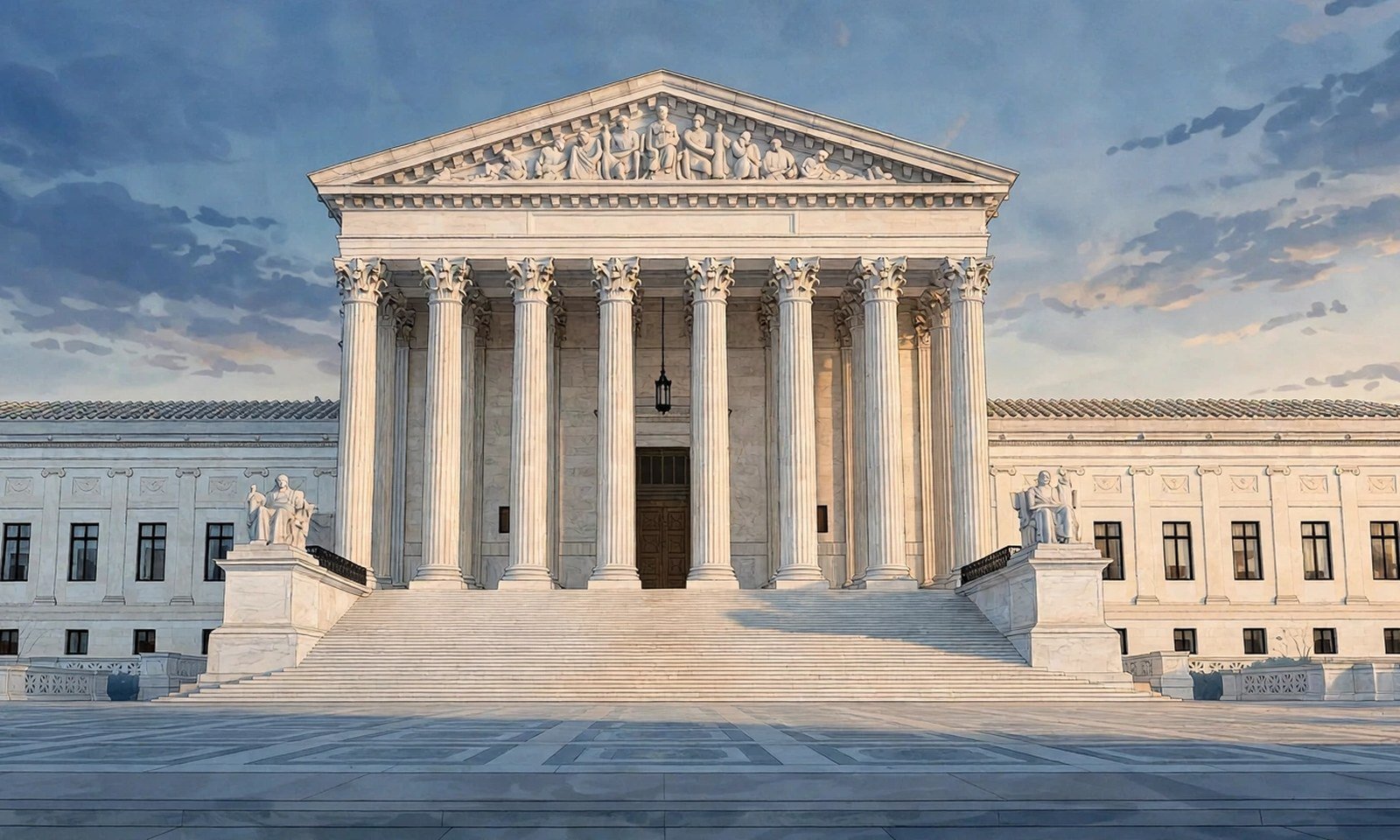
What did the Supreme Court decide in Louisiana v. Callais?
On April 29, 2026, the Supreme Court decided Louisiana v. Callais, Nos. 24–109 and 24–110, by a 6–3 vote. Justice Samuel Alito wrote the opinion, joined by Chief Justice John Roberts and Justices Thomas, Gorsuch, Kavanaugh, and Barrett. Justice Thomas concurred; Justice Elena Kagan dissented, joined by Justices Sotomayor and Jackson.
The Court held that Louisiana’s SB8 congressional map was an unconstitutional racial gerrymander: “Because the Voting Rights Act did not require Louisiana to create an additional majority-minority district, no compelling interest justified the State’s use of race in creating SB8.” The judgment below was affirmed, and the cases — consolidated with Robinson v. Callais — were remanded. The full opinion is available in the slip opinion published by the Supreme Court.
Two corrections matter: the decision date is April 29, 2026, not November 17, 2026, when some articles about the ruling were published. And the Court did not strike down Section 2: compliance with Section 2, “as properly construed,” can still justify race-conscious districting. Justice Thomas argued in concurrence that Section 2 does not regulate districting; that was his position, not the holding.
Why did the Court call Louisiana’s map a racial gerrymander?
After the 2020 census, Louisiana‘s legislature enacted a six-district plan in March 2022 with just one majority-Black district, the 2nd, covering New Orleans and parts of Baton Rouge, though Black residents make up about a third of the state. The Robinson plaintiffs sued, arguing it “packed” Black voters into the 2nd District and “cracked” the rest across the other five, diluting their votes under Section 2.
In June 2022, a Middle District of Louisiana judge held the map likely violated Section 2 and blocked it; the Fifth Circuit unanimously agreed. The Supreme Court stayed the injunction while it decided Allen v. Milligan (2023), then sent it back. The legislature then drew SB8 in a special session in January 2024, keeping the original majority-Black district and adding a second, the 6th, linking Black populations in Baton Rouge and Lafayette with Shreveport’s — in part to protect Republican incumbents Speaker Mike Johnson, Majority Leader Steve Scalise, and Representative Julia Letlow.
Phillip Callais and other voters challenged SB8 as a racial gerrymander, and a three-judge court in the Western District of Louisiana agreed, describing the 6th District as stretching “some 250 miles from Shreveport in the northwest corner of the state to Baton Rouge in southeast Louisiana, slicing through metropolitan areas to scoop up pockets of predominantly Black populations.” The Supreme Court let SB8 stand for the 2024 election, noted probable jurisdiction on November 4, 2024, and ordered reargument on whether a second majority-minority district violates the Fourteenth or Fifteenth Amendments. Under strict scrutiny, race-based districting needs a compelling interest. Louisiana offered Section 2 compliance; the Court held Section 2 did not require the district, so the justification failed.
How did the Court change Section 2 of the Voting Rights Act?
Section 2, 52 U.S.C. § 10301, bars voting practices that leave members of a racial group with less opportunity to elect representatives of their choice. Since Thornburg v. Gingles (1986), courts used a three-part framework plus a “totality of circumstances” inquiry, and a violation could be proved by discriminatory results — the results test Congress added in 1982.
Louisiana v. Callais changes that. Section 2 now “imposes liability only when the evidence supports a strong inference that the State intentionally drew its districts to afford minority voters less opportunity because of their race.” The Court updated Gingles in three ways: illustrative maps must meet all state goals, including partisan ones, without using race; the second and third preconditions require racial bloc voting party affiliation cannot explain; and the totality inquiry must focus on present-day intentional discrimination, with historical discrimination and societal-discrimination effects given much less weight.
The practical effect is that Section 2 redistricting cases will be much harder for plaintiffs to win, and majority-minority districts harder to defend. Election law professor Rick Hasen called it a “Brnovich-style rewrite” of the Gingles factors. The majority itself said that if present-day intentional discrimination is hard to find, that is “cause for celebration.”

What did the dissent say?
Justice Kagan, joined by Justices Sotomayor and Jackson, argued the majority restored the intent test Congress rejected in 1982: “Under the Court’s new view of Section 2, a State can, without legal consequence, systematically dilute minority citizens’ voting power.” Proving discriminatory purpose, she wrote, “is well-nigh impossible,” and the changes “eviscerate the law.”
Her core point is the overlap of race and party: where Black voters mostly support Democrats and white voters mostly support Republicans, asking plaintiffs to “disentangle race from politics” will almost never be met. She called the decision “the latest chapter in the majority’s now-completed demolition of the Voting Rights Act,” warning it “laid the groundwork for the largest reduction in minority representation since the era following Reconstruction.” Those are the dissent’s words; the majority called it an “update.”
What happens next after the remand?
The ruling did not end the case. On remand, the three-judge panel heard argument on October 27, 2026, in Shreveport, at the Tom Stagg Federal Courthouse, on whether it should stay open.
Louisiana, through Deputy Solicitor General Morgan Brungard, asked for dismissal as moot: the map has been redrawn on political rather than racial lines, and a fresh lawsuit would be needed to challenge the redrawn map. The Robinson plaintiffs and intervenors — the NAACP Louisiana State Conference, the Power Coalition for Equity and Justice, and the Legal Defense Fund — want it kept open to examine the 2nd District, represented by Troy Carter and now the state’s only remaining Black-majority district.
Sara Rohani of the Legal Defense Fund said the plaintiffs are trying to “hijack a procedurally improper phase of the case to push forward new claims to try to take down the second Black-majority district.” Edward Greim, for Callais, argued it was not clear the original complaint’s issues had been redressed. The panel issued no ruling; if the case survives, both sides present road maps on December 15, 2026, and the outcome will not affect the November 3, 2026 election. The hearing was covered in detail by the Shreveport-Bossier Advocate.
What does the decision mean for voting maps in other states?
Because Section 2 applies nationwide, other cases are already being measured against Callais. An NPR analysis from November 12, 2026, counted at least 17 active legal fights reckoning with the decision. In North Carolina, Rep. Rodney Pierce dropped a 2023 suit over the state Senate map, calling the Voting Rights Act “a meaningless law with no teeth.” A Native American voters’ case in North Dakota and a Mississippi legislative case were sent back on November 9, 2026, for reconsideration in light of Callais.
Alabama moved fastest. On May 11, 2026, the Court vacated three Alabama congressional judgments and remanded them for reconsideration in light of Callais. The three-judge court then found the plaintiffs likely to prove intentional discrimination and a Section 2 violation under Callais itself, and preliminarily enjoined the 2026 elections under the challenged plan. The Court stayed that order on June 2, 2026, so Alabama votes in 2026 under its 2023 plan. The case is now Allen v. Singleton, No. 26-118.
The Justice Department has also shifted: in its Callais amicus brief it argued Section 2’s redistricting protections are no longer constitutional, and it has dropped several voting-rights cases from the prior administration, including one in Houston County, Georgia, according to NPR. The American Bar Association’s case summary traces the full procedural history, from the 2022 map through the Supreme Court’s decision.
Frequently asked questions
When was Louisiana v. Callais decided?
April 29, 2026, by a 6–3 vote. Argument was heard March 24, 2025, and reargument on October 15, 2025. Some articles about the decision were published November 17, 2026 — a publication date, not the decision date.
What is a majority-minority district?
A district where a racial or ethnic minority group forms the majority, so the group has a realistic opportunity to elect a candidate of its choice. In Louisiana the districts at issue were majority-Black; whether a district counts is usually judged on voting-age population.
Did the Court strike down Section 2 of the Voting Rights Act?
No. Section 2 remains law. The Court reinterpreted it to require a strong inference of intentional discrimination and updated the Gingles framework. Justice Thomas argued in concurrence that Section 2 should not apply to redistricting; the majority did not adopt that position.
Does the ruling change Louisiana’s congressional districts for the 2026 election?
The SB8 map was struck down and Louisiana redrew its map; the redrawn map governs the 2026 elections, and the panel has said its decision will not affect the November 3, 2026 election. The next step is December 15, 2026. Anyone considering legal help with a voting issue should first review the questions to ask when hiring a lawyer.
What is the “strong inference” test the Court adopted?
The Court’s new test for Section 2 violations in redistricting: “§2 imposes liability only when the evidence supports a strong inference that the State intentionally drew its districts to afford minority voters less opportunity because of their race.” Plaintiffs must now offer race-blind illustrative maps meeting all state goals, and show bloc voting party affiliation cannot explain.
What is the status of the case now?
Affirmed and remanded. Louisiana asked the panel to dismiss the case as moot; the Robinson plaintiffs and intervenors asked to keep it open to examine the 2nd District. The panel heard argument October 27, 2026, issued no ruling, and set December 15, 2026 for road maps.
Primary source and editorial methodology
Primary record: Louisiana v. Callais, Nos. 24–109 and 24–110, 608 U.S. 85 (2026) (Alito, J.) — slip opinion, including the syllabus, the Thomas concurrence, and the Kagan dissent. Background and analysis were checked against the Congressional Research Service, Legal Sidebar LSB11431 (May 14, 2026) — full text (PDF) — and the American Bar Association’s case summary.
The October 27, 2026 hearing was reported from the Shreveport-Bossier Advocate’s account and the parties’ public statements. Nationwide effects are reported from NPR’s November 12, 2026 analysis and the redistricting tracker redistrictingonline.org. All characterizations of the ruling — including the dissent’s language and advocates’ descriptions — are attributed to their speakers and are not adopted as this article’s own conclusions. This independently written explainer does not claim firsthand access to court filings or interviews. Verify any later changes through the court.
Further Reading on LawyerOrbit
- Legal News — LawyerOrbit’s coverage of court decisions and legal developments.
- Civil Rights Law Guide — an overview of civil rights law and the lawyers who practice it.
- Free Legal Help — where to find free and low-cost legal assistance.
- How to Verify a Lawyer — how to check a lawyer’s current license with the state bar.
- Lawyers in New Orleans — attorney profiles in Louisiana’s largest city.
- Lawyers in Baton Rouge — attorney profiles in Louisiana’s capital.
LawyerOrbit is not a law firm. This news article provides general information, not individual legal advice. No attorney-client relationship is created by reading it. Voting rules and district boundaries can change with new court orders and legislation; confirm current information with the court or an official source before acting on it.